

For a long time, there were two separate worlds for marketing. One side thought that only great creative work could get results. The other person thought that dashboards, spreadsheets, and performance metrics could tell the whole story. Neither method works on its own today.
Psychology and data come together in modern content campaigns. Brands can’t just trust their gut or look at the results of a campaign anymore because Meta ads,LinkedIn ads, and Instagram ads are all getting more expensive. The question has changed from “Did this work?” to “Can we guess how well it will work before we launch?” Now neuroscience comes into play.
Old performance metrics aren’t enough anymore
After a campaign goes live, most marketers look at it again. The number of clicks, impressions, conversions, and cost per acquisition are now the most important measures of success. These metrics are important, but they only tell you what happened, not why it happened.
In crowded ad spaces, like social media marketing, performance is affected long before someone clicks. In just a few milliseconds, attention, emotional response, and memory formation all happen. People have already made up their minds by the time they scroll past an ad. Neuroscience helps us find these hidden moments that regular analytics can’t see.
Brain Really Works with Campaign Content
Brains are wired to work well. People who scroll through ads on Instagram or LinkedIn don’t think about the headlines, pictures, or calls to action. The brain uses shortcuts instead.
It asks simple questions right away:
– Does this apply to me?
– Does this seem like something you know or trust?
– Should I pay attention to it right now?
Studies in neuroscience have shown that emotions come before logical thinking. No amount of targeting or budget optimization will save a campaign that doesn’t make people feel something or recognize it.
Predicting Attention Before the Campaign Launch
One of the most useful ways to use neuroscience in content campaigns is to predict how people will pay attention. Eye-tracking studies and cognitive load analysis show how people look at ads before they consciously interact with them.
Contrast, focal points, visual hierarchy, and pacing are all creative elements that can make an ad stand out or not. In Meta ads and Instagram ads, where there is a lot of competition, even small changes that make people pay more attention can have a big effect on how well they work.
Marketers can find out which assets are likely to stop the scroll before they spend money on media by testing creative ideas with neuroscience-based models.
Emotional triggers make people buy
Data often assumes that people make decisions based on logic. Neuroscience shows otherwise.
Campaigns that make people feel something help them remember things better. This means that people are more likely to remember the brand, even if they don’t buy it right away. Over time, this familiarity makes things easier and boosts response rates for future LinkedIn ads and retargeting efforts.
When you write content for a campaign, it should be clear and touch people’s hearts. Messages that sound human work better than those that sound like they were made for algorithms.
Cognitive Ease and Trust Signals
The brain likes information that is easy to understand. Cognitive fluency is a big part of how well a campaign does.
Layouts that are easy to read, messages that are easy to understand, and patterns that are familiar make it easier for the mind to work. Users trust ads more when they don’t have to think about them too much. This is especially true for B2B LinkedIn ads, where trust and authority can affect choices.
Testing based on neuroscience can find points of friction that make people hesitate, confuse them, or lose interest before they affect live performance.

Data is still important, but earlier in the process.
Neuroscience does not take the place of data. It changes when data is used.
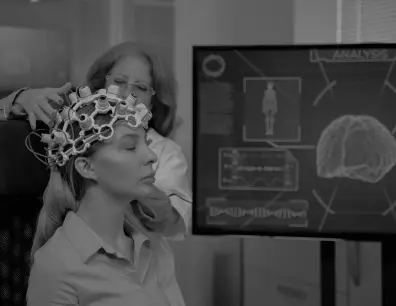
Brands use predictive insights during the creative process instead of waiting for performance reports. Marketers can put ideas at the top of their lists by combining behavioral data with brain-response indicators. This helps them understand how people naturally process information.
This method cuts down on wasted money on Meta ads, Instagram ads, and other social media marketing efforts.
The Edge of Predictive Creative in Business
As ad platforms get better, targeting benefits get smaller. The only thing left is the quality of the creativity. When brands use neuroscience in their content campaigns, they have an advantage because they can launch with confidence instead of hope. Before increasing budgets, teams can use predictive creative testing to improve messaging, visuals, and structure.
This makes performance more consistent and means fewer changes that have to be made during the campaign.
Where Creative and Data Finally Meet
It’s not about being creative or data-driven in the future of marketing. It is creative based on what we know about how the brain works.
Neuroscience connects intuition and evidence, which helps marketers create campaigns that feel real and work well on LinkedIn, Meta, and Instagram ads.
In a world where attention is hard to get and there are a lot of competitors, knowing how the brain works is no longer a choice. It gives you a strategic edge.
FAQs
No, it makes analytics better by predicting performance sooner.
No, it helps any brand that runs campaigns with high stakes.
Yes, especially when it comes to building trust in LinkedIn ads.
Emotion gets people to pay attention, while clarity helps them convert.
Costs are different, but it usually cuts down on wasted ad spending.